27 July 2013

TheHairyCoo.com

 While cruising about Stirling... trying to follow Tim through roundabouts with 5 and 6 lanes in search of the William Wallace (think Braveheart) monument... 

We spotted this tour bus,


which immediately cracked us up.

Why?

Just that morning, at the café/tourist trap where we stopped to eat our last authentic Scottish breakfast - Have you ever had baked beans for breakfast? - we met this guy...


See the resemblance?


If you've ever heard of Hamish before, this may be why.

According to Wikipedia:
The breed was developed in the Scottish Highlands and Western Isles of Scotland. Breeding stock has been exported to the rest of the world, especially Australia and North America, since the early 20th Century. The breed was developed from two sets of stock, one originally black, and the other reddish. Highlands are known as a hardy breed due to the rugged nature of their native Scottish Highlands, with high rainfall and very strong winds. Highland cattle have been successfully established in many temperate countries and indeed in countries where winters are substantially colder than Scotland's such as in central Europe and Canada. Their hair gives protection during the cold winters and their skill in looking for food allows them to survive in steep mountain areas. They both graze and browse and eat plants which many other cattle avoid.
However, as adorable as Hamish may be... I don't think he holds a candle to these little cuties, so patiently waiting for that traditional Scottish breakfast, do you?


We did manage to see those sites we set out to see while in Stirling, even if only from a distance due to the fact that we still had some miles to cover and our vans were already almost late!

William Wallace Monument


Stirling Bridge (sort of... or so I'm told)

Stirling Castle


26 July 2013

Five Minute Friday ~ Broken


We toured what remained of the ancient castle,


abandoned centuries ago and not just left to its fate, but
destroyed by the very hands that once maintained it.

 Explosively "flattening" the gatehouse by the inhabitants as they left meant that the fortress would be unusable to any "re-possessors" of the building.

What was once strong, defensible, empowering, intimidating and sheltering
became broken.

And I've been thinking about broken since.


We wandered about the remnants of ancient civilizations with incomprehensible to me religions and standing stones are all that remain...

...and even many of those are crumbling, cracking, splitting, tumbling 
and would disappear were there not those stepping in, protecting.


I see remnants of my own faith forsaken.

Ancient churches deserted and discarded,
what once used to be a place of faith, a sentinel reminding that
 Christ alone gives men a hope and a future ~

~now perhaps nothing more than a souvenir of what once was and what often happens
when and where men choose their own way, work out their own faith, 
without God's grace.

In all of that, I can easily see me:
struggling with doubts,
tired of not knowing the next step,
wondering what guarantees me that my answers are THE answers.

And whether I look it or act it or say it or not,
I wonder if I'm breaking or broken...

******************************************
Lisa-Jo is having people link up differently this week ~ head over to her page to find the links and directions if you want to join in!

Five Minute Friday


25 July 2013

Heading back to Stirling and Glasgow ~ via the Misty Mountains


We chose a campground instead of "wild camping" our last night camping... 
They said they had some sort of "midge protection." 

If you don't know why, you obviously haven't yet watched Rebekah's video...


Even so, it is still true that the next morning...
wakin' up is hard to do!

24 July 2013

A castle... at long last!

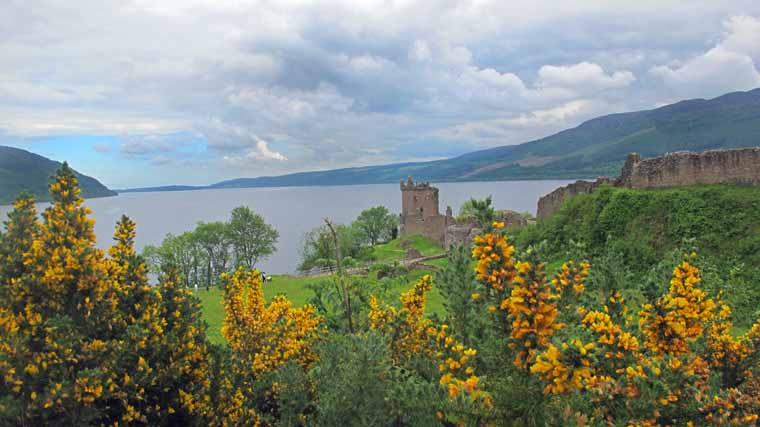
No "Wordless Wednesday" today ~ Urquhart's story (I think) is too fascinating not to be told ~ after all, there's over 1000 years of history, many consider it the greatest and most magnificent of the Highlands', and the castle overlooks the beautiful (and sometimes mysterious) Loch Ness.

More than 1,000 years of Highland drama centered around this structure.

According to records, St Columba visited Loch Ness around 580. He travelled through Glen Urquhart, pausing to banish a marauding ’water beast’ and to baptise a Pictish nobleman as he lay dying in his fort. Although there is no concrete evidence to link this fort with the site at Urquhart, archaeological remains confirm that the highest part of the castle was a well fortified site at this time. 
The castle surfaces from obscurity more than five hundred years later, around 1230, when Alexander II granted the Urquhart estate to Sir Thomas le Durward. His son, Alan, constructed the first castle on the south of the promontory at Urquhart. 
Holding a key strategic position in the glen, the castle suffered during the 
Wars of Independence. Captured by Edward I of England in 1296, it was surrendered to the Scots in 1298. The castle soon changed hands again when 
in 1308 Robert the Bruce took control of Urquhart for the Scottish Crown. 
 
From the end of the 14th century, the focus of conflict shifted to the west. The new enemies were the MacDonald clan, the Lords of the Isles. In 1395 the MacDonalds seized the lands and castle of Urquhart and for the next 
hundred years the castle and glen were tussled over. In 1470 Sir Duncan Grant was appointed to try and control the situation. His grandson gradually restored order and as a reward was given the title to the estate and castle by James IV in 1509. The Grants built themselves new living accommodation at the north of the promontory.
 
The castle inmates could not yet relax, however. In 1545 the MacDonalds cleared out the castle in their final ‘Great Raid’ and in 1644 the castle was gutted once again and the Grants driven out, this time by a posse of Covenanters who objected to the Grants’ support for Charles I. 
The final attack came in 1690 when after resisting a siege by Jacobites, soldiers garrisoned at the castle blew up some of the buildings as they left. The damage was never repaired and you can still see parts of the shattered walls in place where they fell. (copied and pasted from "Investigating Urquhart Castle")
Loch Ness was, in fact, one of my biggest surprises in Scotland. I never imagined it was so BIG! Maybe because it is long and narrow and in most of those fuzzy "Nessie" pictures published any and everywhere you can almost always see the far side, I had this image in my mind that though it may be deep, it wasn't expansive. Driving along the shoreline rapidly corrected that thought! Deep was a correct impression however. One of the placards we read stated that Loch Ness was, on average, deeper than the average in the North Sea!

But back to Urquhart... we were finally ON. OUR. WAY. FOR. REAL!

Some sights along the way ~

another CLB was spotted


Loved the reflection off the water

Loved being "off the beaten path" for a bit!

Stone walls, wildflowers, rugged hills, stormy skies with blips of brilliant blue and vivid greens... all that is missing are some sheep!

Look at that color...


An old church building


and yet another CLB


finally back to Loch Ness


in the gardens, by the parking lot for Urquhart Castle


waiting for the film that told all about the castle to start

exploring the museum and interpretive center... before going into the castle itself


model, imagining what the castle might have looked like... once upon a time

Urquhart, finally!

the path down to the castle


a trebuchet


loved the detail on this wheel


what was the moat


completing the "fact scavenger hunt" provided for kiddos up at the museum


looking down at where the drawbridge would have been


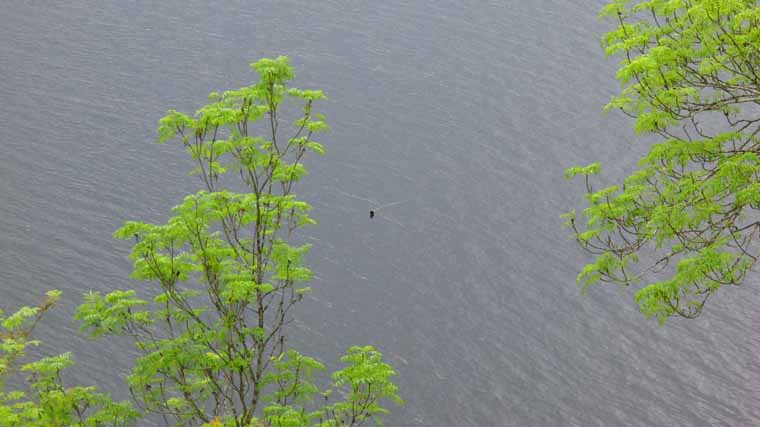
Oh wait! What's that mysterious creature swimming through Loch Ness?

LinkWithin

Related Posts with Thumbnails